

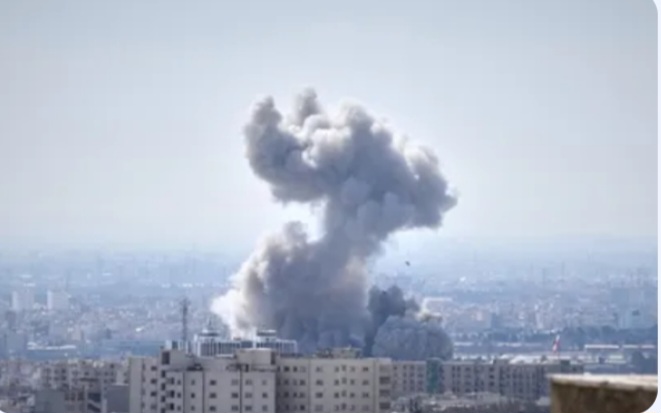
The security landscape in West Asia has shifted sharply as the conflict involving Iran expands, placing Gulf nations, including the UAE, Kuwait, and Saudi Arabia, under increasing threat.
In the UAE, air defence systems intercepted six ballistic missiles and nine drones launched from Iran earlier today. The Ministry of Defence confirmed no direct ground impacts in the latest incident.
Kuwait has also come under direct attack, with authorities confirming strikes on key maritime infrastructure. The Ministry of Public Works reported that Shuwaikh Port in Kuwait city and Mubarak Al-Kabeer Port on Bubiyan Island were hit by drones and cruise missiles, causing significant material damage but no reported casualties.
This follows an earlier incident this week in which an attack triggered a fire at Kuwait International Airport. In Saudi Arabia, defence systems intercepted four drones over the Eastern Province, as the kingdom reinforced its security posture and signed an air defence agreement with Ukraine during a visit by President Volodymyr Zelenskyy.
Diplomatic efforts to de-escalate the situation are ongoing, with multiple channels of negotiation currently underway amid rising regional tensions.
GCC Secretary-General Jasem Al-Budaiwi has called for Gulf states to be included in ongoing negotiations, warning that current diplomatic efforts could allow Iran to consolidate its position in the Strait of Hormuz even as missile and drone threats persist.
Saudi Arabia has joined a broader regional statement condemning what it described as violations of sovereignty, while also signalling the possibility of collective self-defence.
“Gulf officials say the growing security threat is also driven by concerns over economic stability and long-term development plans.
Regional leaders fear that attacks targeting major commercial hubs such as ports and airports could undermine investor confidence and disrupt economic diversification initiatives, including Vision 2030 strategies across the Gulf.
Energy security remains another major concern. Despite a reported U.S. pause on targeting Iranian energy infrastructure, Gulf facilities continue to face risks.
Qatar has declared force majeure on some LNG exports, while Kuwait has reported power disruptions, increasing pressure for a decisive resolution rather than a prolonged standoff.
Within the GCC, Oman continues to advocate for diplomacy and supports a 15-point peace framework, urging dialogue to prevent wider instability across West Asia even as the broader regional stance grows more assertive.