

Around 40 passengers from a cruise ship hit by a deadly hantavirus outbreak disembarked at the remote South Atlantic island of St Helena last month without contact tracing, nearly two weeks after the first passenger died on board. The Dutch Foreign Ministry has confirmed the number.
It comes as international authorities intensify efforts to contain a rare outbreak of deadly disease linked to the Andes strain of hantavirus after three people who were aboard the cruise ship MV Hondius have died since it set sail from Argentina a month ago.
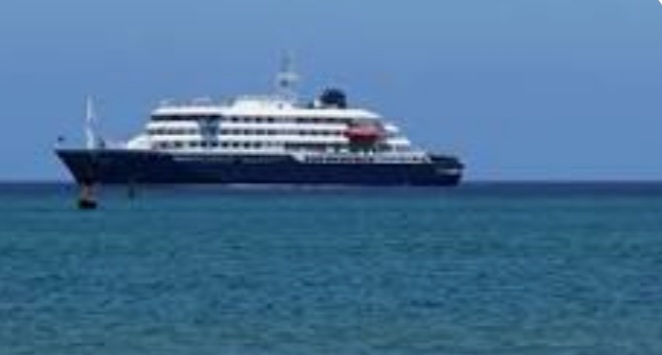
The Dutch-flagged expedition vessel, carrying around 150 passengers and crew from 23 different countries, is now sailing towards Spain’s Canary Islands under strict precautionary measures after being anchored for three days near Cape Verde, an archipelago nation off the West African coast.
The ship operator company, Oceanwide Expeditions, had previously said the body of the Dutch man who died on the 11th of April was taken off the ship at the island of St Helena, where his wife also disembarked. She then flew to South Africa and died there.
The company had not previously acknowledged that dozens more people left the ship at that time. The company said the people who left the ship to return to their home countries were of at least 12 different nationalities.
Meanwhile, two passengers in serious condition have arrived in the Netherlands for treatment after being evacuated from the cruise ship. A third passenger, reported to be in stable condition, remains aboard a delayed evacuation flight.
The three suspected hantavirus patients of British, Dutch and German nationalities were transferred by medical evacuation teams in full hazmat gear, including respirators, gowns and face shields, from the cruise ship into specialised air ambulances near Amsterdam and Cape Verde this week.
The World Health Organisation said the outbreak likely involves the Andes strain of hantavirus – the only known strain capable of limited human-to-human transmission through close contact. Authorities in Europe, South Africa and Argentina are continuing contact tracing, quarantine planning and laboratory testing to contain the outbreak.
Hantavirus pulmonary syndrome is usually transmitted through inhalation of aerosolised rodent urine, saliva or droppings. However, the Andes strain circulating in parts of Argentina and Chile has previously shown limited person-to-person transmission, particularly among close household contacts.