

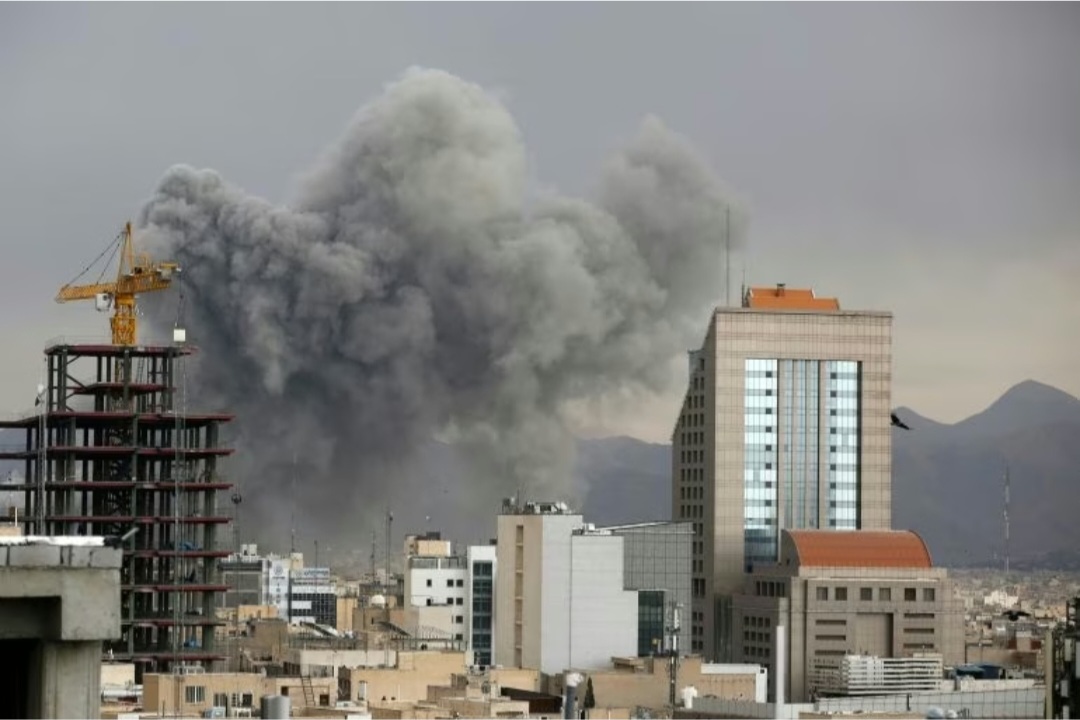
Today marks the 100th day of the conflict between the United States and Iran, a confrontation that has steadily expanded beyond its original front lines to affect key flashpoints across the Gulf and wider West Asia.
What began with U.S. and Israeli strikes on Iran in late February has evolved into a broader regional crisis involving missile exchanges, threats to maritime traffic in the Strait of Hormuz, and renewed tensions in Lebanon, placing increasing pressure on efforts to preserve a fragile ceasefire.
The latest escalation unfolded over the weekend. U.S. Central Command said on Sunday that American forces shot down two Iranian one-way attack drones over the Strait of Hormuz after determining they posed a threat to international maritime traffic.
The interception followed a series of incidents that began on Friday, when U.S. forces downed four Iranian drones in the same strategic waterway. Washington subsequently carried out what it described as self-defence strikes against Iranian coastal radar and surveillance sites at Goruk and Qeshm Island.
Iran responded on Saturday by launching ballistic missiles toward Bahrain and Kuwait. U.S. officials said most of the missiles were intercepted before reaching their targets. The exchange marked one of the most direct confrontations between the two sides since the conflict began, heightening concerns about the security of international shipping routes and critical infrastructure across the Gulf.
On the 100th day of the conflict, tension still prevails in the Strait of Hormuz, with kinetic activity continuing to threaten one of the world’s most important maritime corridors. U.S. Central Command says American forces intercepted two Iranian one-way attack drones on Sunday after determining they posed a threat to international shipping.
The incident follows Friday’s downing of four Iranian drones and subsequent U.S. strikes on Iranian radar and surveillance installations at Goruk and Qeshm Island. Iran responded on Saturday by launching ballistic missiles toward Bahrain and Kuwait, with U.S. officials reporting that most were intercepted before reaching their targets.
The crisis has also spilled onto other fronts in West Asia. In southern Lebanon, a Lebanese military vehicle near Nabatieh was struck during an Israeli operation, resulting in casualties among Lebanese armed forces personnel.
Diplomatic initiatives aimed at halting the conflict continue, although significant obstacles remain. Discussions focus on preserving the ceasefire, ensuring the security of maritime navigation through the Strait of Hormuz, sanctions-related issues, and the future of billions of dollars in frozen Iranian assets held abroad.
Reports from Washington indicate that U.S. officials are considering whether Iranian assets, including frozen funds, could be used to help Gulf countries recover from damage caused by recent attacks, although no final decision has been announced.
Despite continuing mediation efforts, renewed military exchanges and disagreements over key regional security issues have further complicated negotiations. As the conflict moves beyond the 100-day mark, prospects for a broader peace agreement remain uncertain, with both Washington and Tehran continuing to combine diplomatic engagement with military pressure.