

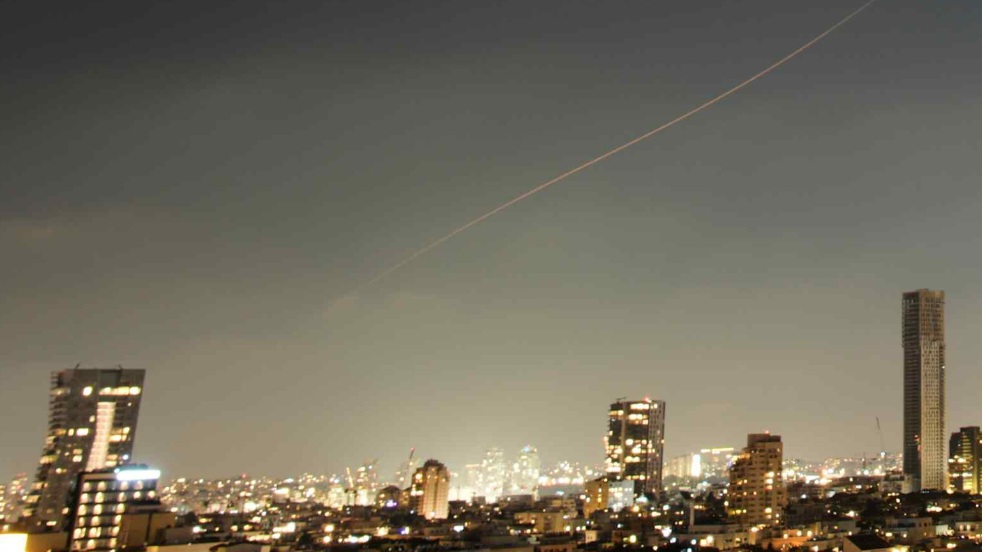
West Asia is witnessing its most serious escalation in weeks after a fragile ceasefire between Israel and Iran collapsed, triggering successive rounds of missile and air strikes across the region.
The latest cycle of hostilities began late Sunday when Iran’s Islamic Revolutionary Guard Corps launched ballistic missiles toward Israel, saying the attack targeted the Ramat David airbase in northern Israel.
Tehran described the strike as retaliation for Israeli air operations against Beirut’s southern Dahieh district. Israel confirmed the missile launches and said its air defence systems were activated to intercept the incoming projectiles.
The confrontation intensified early Monday when the Israeli military announced that its Air Force had carried out strikes against military targets in western and central Iran. According to the IDF, the attacks targeted military infrastructure and radar installations.
Iranian media reported explosions in several locations, although the extent of the damage could not be independently verified. Hours later, the Revolutionary Guards said they launched a second wave of missiles aimed at the Nevatim and Tel Nof airbases in Israel, further widening the exchange and raising fears of a prolonged military confrontation.
Israeli authorities responded to the deteriorating security situation by suspending educational activities in several areas and maintaining heightened alert levels nationwide.
The renewed fighting has also disrupted civilian air traffic across the region. Iraq and Syria announced temporary closures of their airspace as a precaution, while airlines rerouted flights to avoid potential conflict zones.
The crisis has drawn in other regional actors. Yemen’s Houthi movement announced a ban on Israeli-linked shipping in the Red Sea and claimed responsibility for a separate missile launch toward Israel. The Israeli military said the projectile was intercepted before reaching its target.
The latest exchange marks a significant setback for efforts to preserve a ceasefire that had largely held since April. Iran has portrayed its missile launches as a measured response to Israeli military actions in Lebanon, while Israel says its operations are aimed at degrading Iranian military capabilities and preventing further attacks.
Diplomatic efforts are now intensifying to prevent the conflict from expanding further. U.S. President Donald Trump has urged both sides to avoid additional escalation and return to negotiations.
Regional mediators are also working to keep communication channels open. Qatari Prime Minister Sheikh Mohammed bin Abdulrahman Al Thani held discussions with Iranian Foreign Minister Abbas Araghchi as part of ongoing efforts to preserve dialogue between Tehran and Washington.
The broader negotiations remain complicated by disagreements over maritime access through the Strait of Hormuz and wider regional security arrangements.
As military activity continues across multiple fronts, concerns are growing that the latest exchange could trigger a broader regional crisis with implications for energy markets, aviation, and international shipping.