

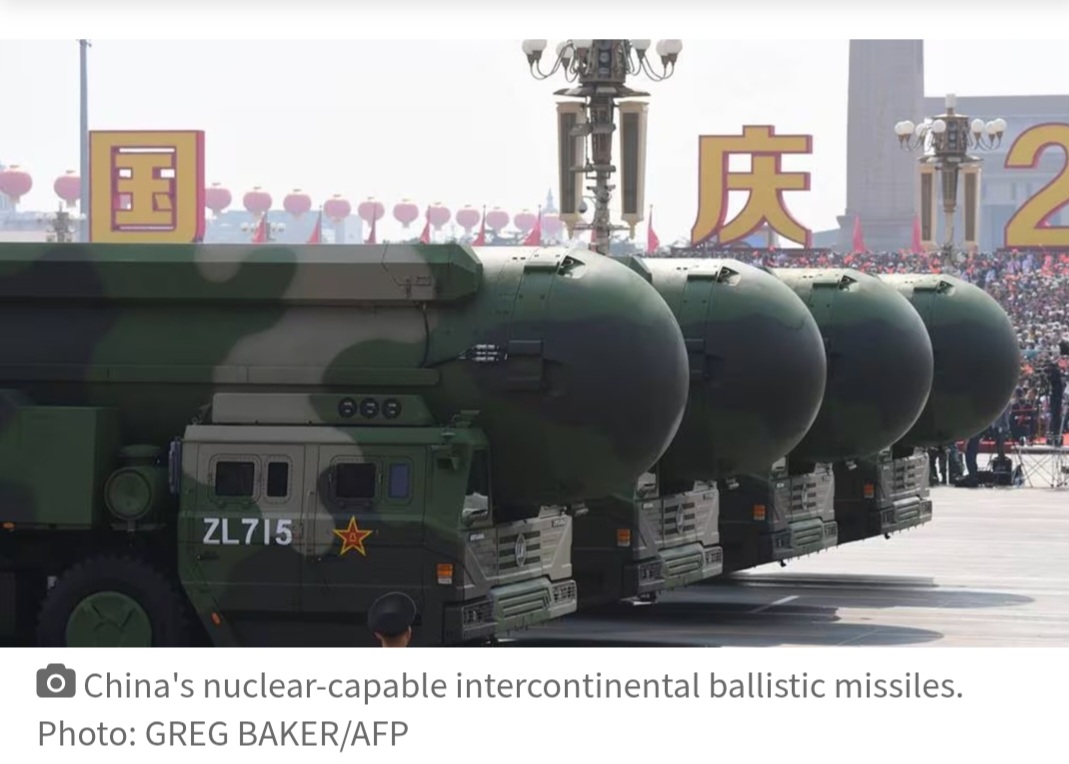
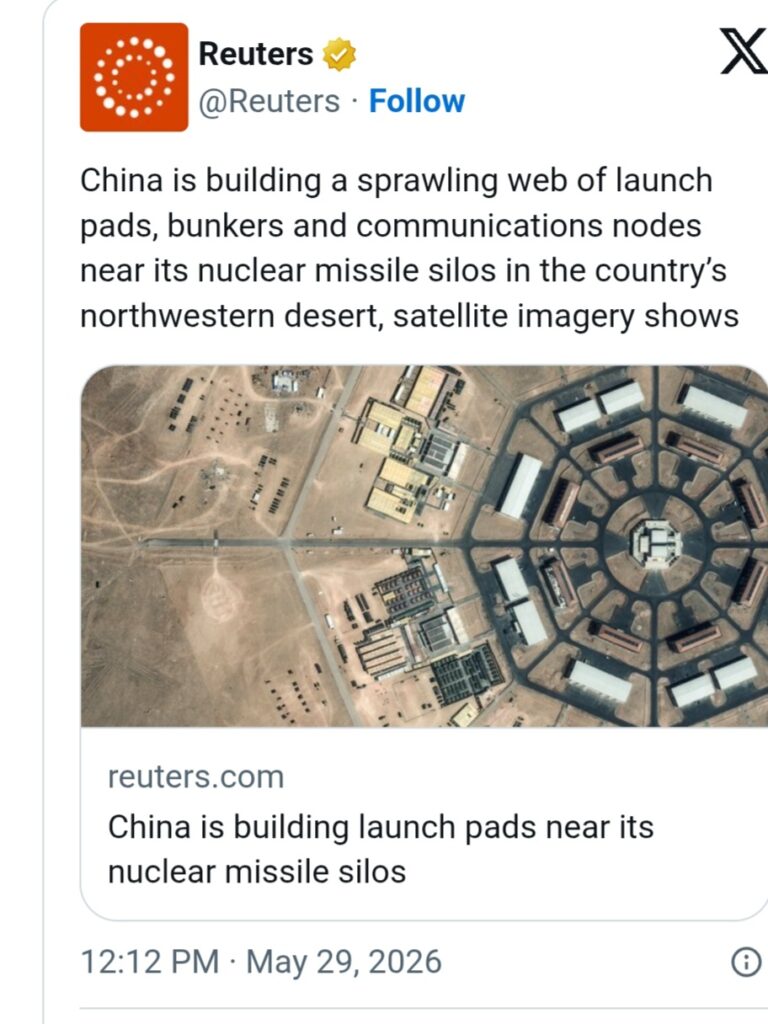
Satellite imagery has revealed that China is building a network of launch pads, bunkers, and communications hubs near its Hami nuclear missile silo field in Xinjiang, a move analysts say could strengthen Beijing’s ability to carry out a retaliatory nuclear strike.
The data, provided by Colorado-based spatial intelligence firm Vantor and reviewed by Reuters, shows over 80 concrete pads across the desert, along with infrastructure that analysts claim could support mobile missile launchers, air defense systems, electronic warfare, satellite communications, and military command operations.
Experts said the project represents a major expansion of hardened facilities supporting China’s land-based nuclear capabilities.
“We can see this infrastructure is being built on a grand scale, covering thousands of square kilometers of desert beyond the silo fields,” Alexander Neill of the Honolulu-based foreign policy research institute Pacific Forum told Reuters.
He described the development as “a very considerable enhancement and diversification of China’s strategic nuclear deterrent.”
Currently, Washington estimates China could field 1,000 nuclear warheads by 2030.
At the center of the network are two octagon-shaped military complexes built over the past six years southwest of the Hami silo field, with surrounding areas having housing, vehicle facilities, fortified storage areas, airstrips, and rail links.
Recent imagery also captured military activity, including large vehicles, temporary structures, and what analysts identified as possible camouflaged launch positions.
Experts said the sites are connected by roads and underground conduits that may contain fiber-optic communications links.
Beijing has not publicly commented on the newly identified infrastructure, while its defense ministry did not respond to Reuters for comments.
The Pentagon also declined to discuss intelligence-related matters.