

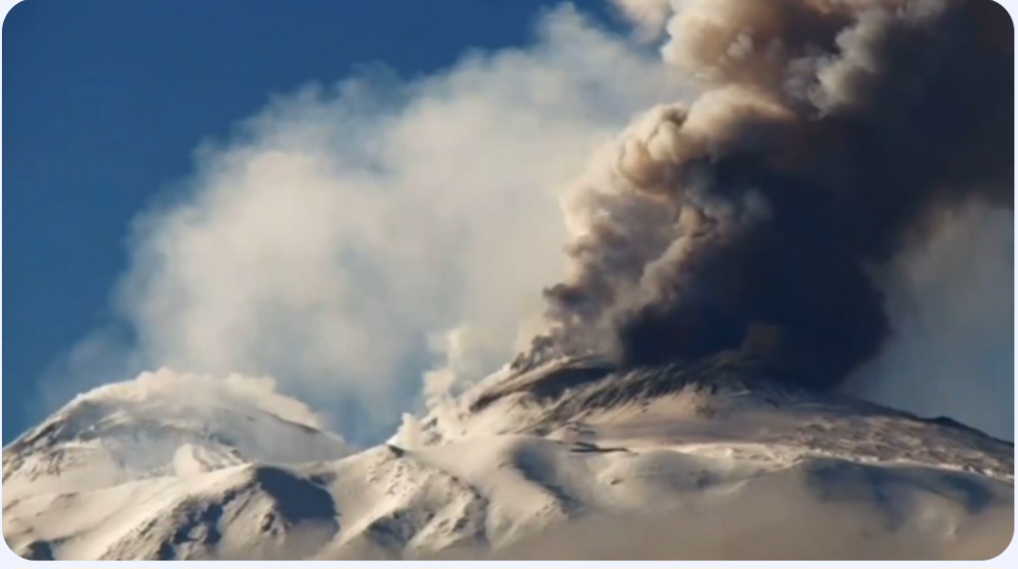
Mount Etna, a stratovolcano on the east coast of Sicily, Italy, became active again, sending glowing lava and small amounts of ash into the air from its north-eastern crater.
Italy’s National Institute of Geophysics and Volcanology informed that winds carried the ash towards the north-east, with light ash falling on the town of Taormina and nearby ski areas from yesterday’s eruption. Scientists also reported small explosions from another crater, throwing hot material several metres high.
The regional civil protection agency temporarily raised the alert level as a precaution against the possible occurrence of lava fountains. Mount Etna is Europe’s most active volcano, erupts often and is constantly monitored.
Huge clouds can be seen rising from the mountain as a serene skier makes their way down the slopes, apparently unaware of the eruption.
Etna entered a new eruptive phase yesterday December 26, with Italy’s National Institute of Geophysics and Volcanology (INGV) confirming the activity. Jets of lava spurted over 1000ft into the air, the INGV said, adding that rock fragments were flung “several kilometres above the summit of Etna”.