

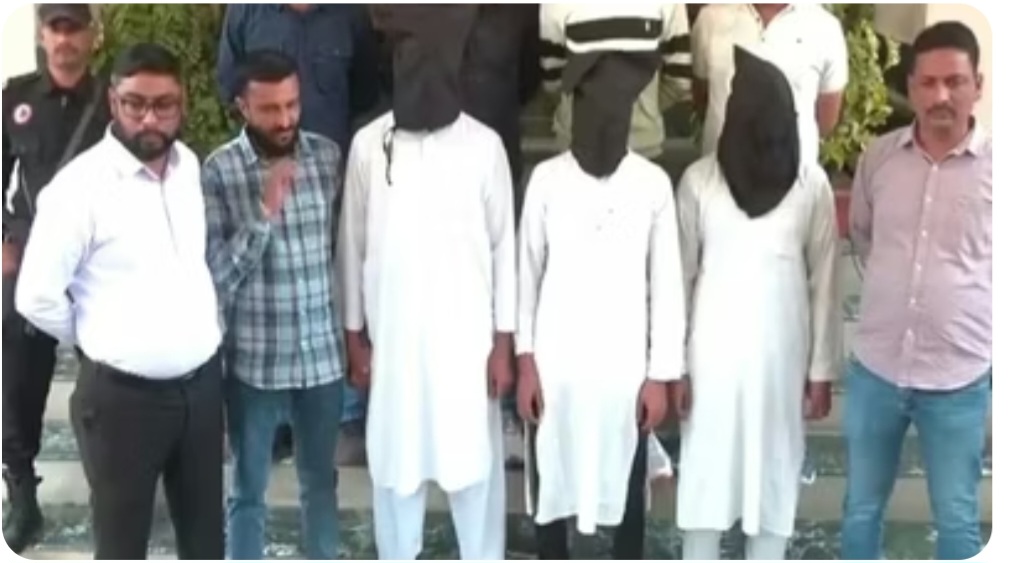
Gujarat ATS arrested a Hyderabad doctor and two others in a pan-India terror plot. The doctor was found with firearms and ricin, a toxic poison, and was in contact with an Afghanistan-based ISKP operative. Accused also conducted reconnaissance of RSS offices and other religious sites.
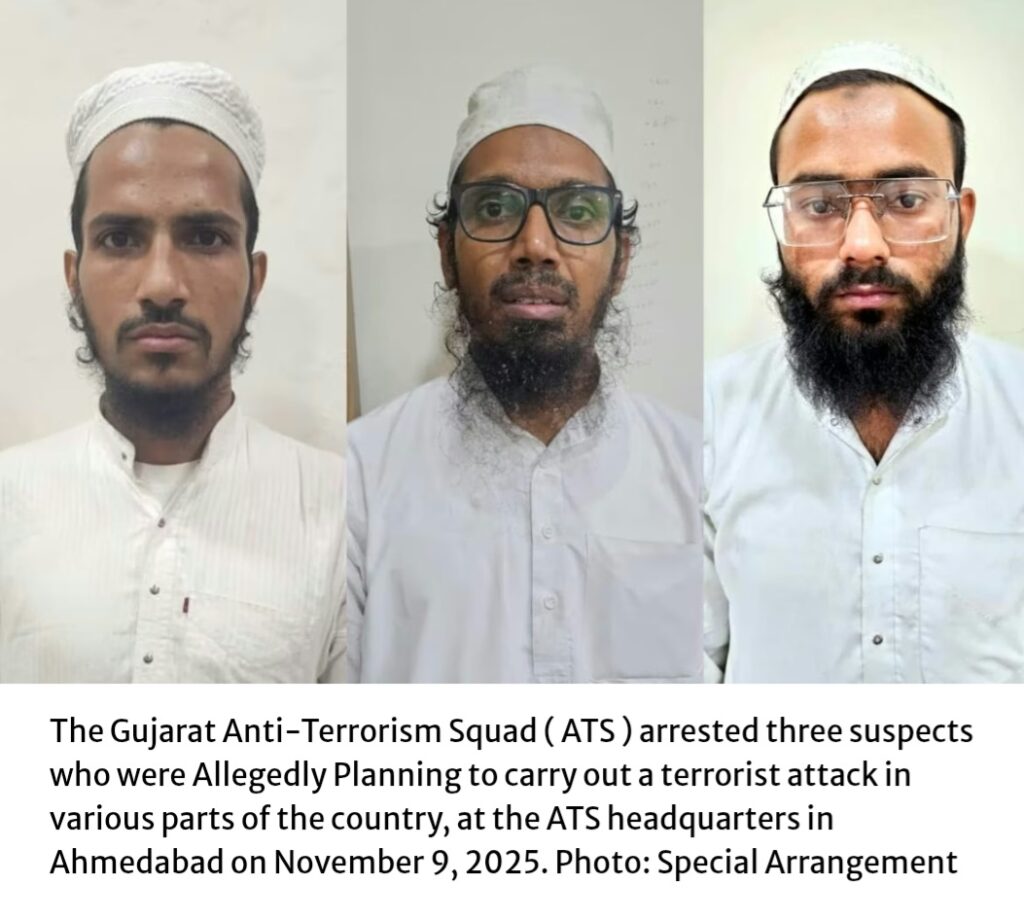
November 10, 2025. The Gujarat Anti-Terrorism Squad (ATS) arrested a Hyderabad-based doctor, educated in China, and two of his alleged accomplices on Sunday (November 9, 2025), exposing a plot involving chemical weapons and connections with a global terror network. The accused were allegedly developing ricin, an extremely lethal toxin derived from castor beans, for use in planned terror strikes, police said.
Officials identified the main suspect as Ahmed Mohiyuddin Saiyed, who worked with Azad Suleman Sheikh and Mohammed Suhail Mohammad Saleem. The two assisted him with reconnaissance and arms supply. A senior ATS officer said the trio had surveyed locations in Lucknow, Delhi, and Ahmedabad as part of their operational groundwork.
Mr. Saiyed was detained near Adalaj in Gandhinagar on November 7, and two Glock pistols, one Beretta pistol, 30 live rounds, and four litres of castor oil were recovered from him, an official said.
According to Gujarat ATS’s Deputy Inspector General Sunil Joshi, Mr. Saiyed, though qualified, had embraced “radical ideologies” and was actively seeking to raise funds and recruit members for terrorist operations. “He had already begun the initial process of making ricin using materials obtained for chemical synthesis,” the officer said.
Investigators suspect the group’s handler, Abu Khadija, operates from Afghanistan and is associated with the Islamic State Khorasan Province (ISKP). He is also believed to have coordinated weapons deliveries across the Pakistan border using drones.
The ATS learned that the three were in Gujarat to exchange weapons and finalise plans for upcoming operations. During questioning, Mr. Saiyed admitted that he had picked up a consignment of arms from a remote area in Kalol, Gandhinagar. The investigation revealed that his associates, Mr. Sheikh and Mr. Saleem, both from Uttar Pradesh, supplied him with weapons procured from Hanumangadh in Rajasthan. They were arrested in the Banaskantha district based on digital evidence from Mr. Saiyed’s phone.
Officials seized three phones and two laptops from the suspects. An analysis of their call records indicated reconnaissance activities spanning roughly a year, they said. The ATS has not yet found evidence of a local sleeper cell but is continuing to probe possible links with national and international groups.
“The CDR (call detail record) and interrogation of the accused showed they had been conducting reconnaissance (operations of sensitive locations) for the last year. We have not come across any local sleeper cell yet in their connection, but an investigation will be carried out on every aspect of involvement of local and international networks,” Mr. Joshi said.
Whether they are involved with the ISKP is a matter of investigation, he said, adding that the Gujarat ATS was investigating the case in different States.
Mr. Joshi said that coordination with Central and State agencies is underway to apprehend more suspects. The accused have been charged under the Unlawful Activities (Prevention) Act, the Bharatiya Nyay Sanhita, and the Arms Act.
Mr. Saiyed has been remanded to ATS custody until November 17, while Mr. Sheikh and Mr. Saleem were presented before a court on Sunday for further proceedings.