

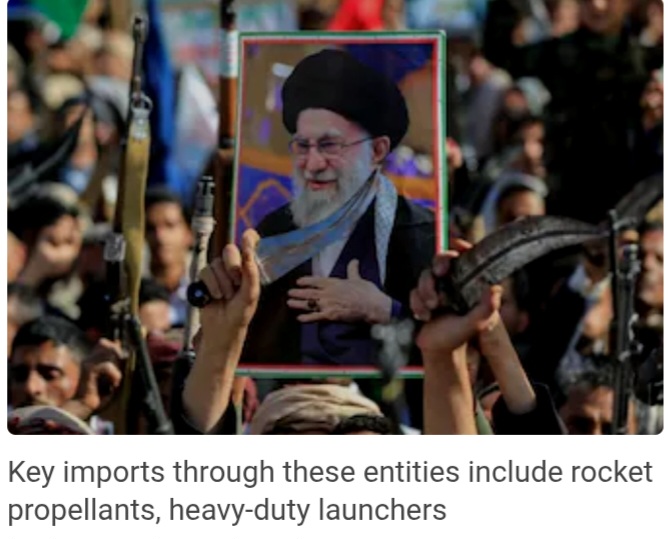
Dubai: Iran has used a secret network of more than 5,000 military-linked agencies to import billions of dollars worth of equipment, explosives and missile components despite Western sanctions and a US naval blockade, a Reuters investigation revealed on Thursday, as Tehran claimed its military readiness was stronger than during its previous wars.
One agency alone imported $2.3 billion worth of military-related goods between January 2025 and June 2026, including rocket fuel ingredients, aircraft parts, industrial machinery and hundreds of heavy-duty trucks that could be adapted for military use, according to shipping records examined by Reuters.
The findings emerged as Iranian Vice President Mohammadreza Aref declared that Tehran was managing the strategically vital Strait of Hormuz and had significantly strengthened its defensive capabilities.
“The Strait of Hormuz has become a source of fear for the enemy, and Iran manages it with ease. The Strait of Hormuz belongs to us, and the country’s strategies on this issue will become clearer,” Aref said on Thursday.
“Our defensive readiness today is much greater and stronger than during the two 12-day and 40-day wars,” he added.
His remarks came amid renewed US-Israeli preparations for possible military strikes against Iran and diplomatic efforts to prevent another escalation.
Secret network of 5,000 agencies.
The Reuters investigation identified more than 5,000 agencies whose names begin with MOD, referring to Iran’s Ministry of Defence.
The entities share the Tehran address of the Ministry of Defence and Armed Forces Logistics, with some linked to the Islamic Revolutionary Guard Corps (IRGC) and powerful business conglomerates known as bonyads.
Although official records list February 11, 1979, as their founding date, most were established in 2013, when Iran was already facing severe international sanctions.
Working with Israeli-American risk consultancy 240 Analytics, Reuters examined Iranian banking records, corporate filings and approximately 19,000 import records to trace the network.
The investigation found that the agencies operated through overseas intermediaries and companies, using proceeds from oil sales that bypassed sanctions to purchase equipment for Iran’s military establishment.