

Attention remains focused on Lebanon after a fragile U.S.-brokered arrangement between Israel and Hezbollah raised hopes of easing tensions in the region, though fresh violations have cast doubt over its durability.
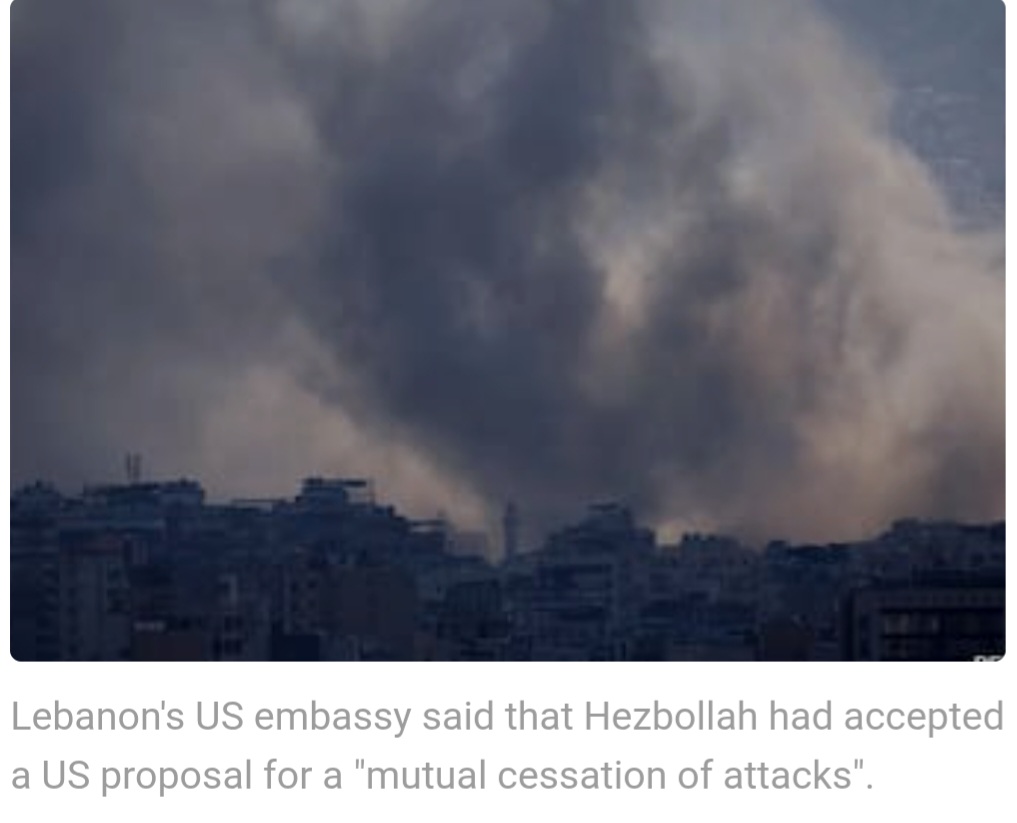
Lebanese officials say Hezbollah has accepted a U.S. proposal under which the group would halt attacks on Israel, while Israel would suspend strikes on Beirut’s southern suburbs, a Hezbollah stronghold. However, the understanding falls short of a comprehensive ceasefire, and clashes have continued in parts of southern Lebanon.
U.S. President Donald Trump has described the development as an agreement to “stop all shooting” following talks with Israeli Prime Minister Benjamin Netanyahu and contacts with Hezbollah through mediators.
But Israeli officials have taken a more cautious position, saying military operations could resume if Hezbollah attacks persist. Soon after the announcement, the Israeli military reported intercepting projectiles fired from Lebanese territory, highlighting the fragility of the arrangement.
The situation comes at a sensitive time for wider U.S.-Iran diplomacy, with Lebanon emerging as a key flashpoint that could affect ongoing negotiations between Washington and Tehran.
Meanwhile, United Nations Secretary-General António Guterres has recommended extending the UN peacekeeping mission in Lebanon, citing continued security risks and the need to support the Lebanese Armed Forces.
The fragile Lebanon de-escalation is unfolding against a far more dangerous diplomatic backdrop. Iran has formally suspended all dialogue and exchange of messages through mediators with the United States, citing the continuation of Israeli military operations in Lebanon, which Tehran had flagged as a precondition of any ceasefire agreement.
Iranian sources linked to the resistance front have placed on their agenda the complete closure of the Strait of Hormuz and the activation of additional fronts, including the Bab al-Mandeb Strait at the mouth of the Red Sea, with the stated aim of punishing Israel and its supporters.
Tehran said there won’t be further talks until Iran’s demands for a full halt to Israeli operations in Lebanon and Gaza are met. The fighting in Lebanon presents a major obstacle to the emerging deal between Washington and Tehran, as Iran insists that any agreement must include a ceasefire in Lebanon.
The current ceasefire arrangement, effective since 16 April and later extended, has been repeatedly violated. Lebanon’s Prime Minister has accused Israel of pursuing a scorched-earth policy in the south, while France has called an emergency session of the UN Security Council.
Planned direct talks between Lebanon and Israel, scheduled at the U.S. State Department on June 2 and 3, now appear uncertain. Diplomatic observers say the unfolding situation is testing multiple peace frameworks simultaneously, with no clear sign yet that any of them are holding.