

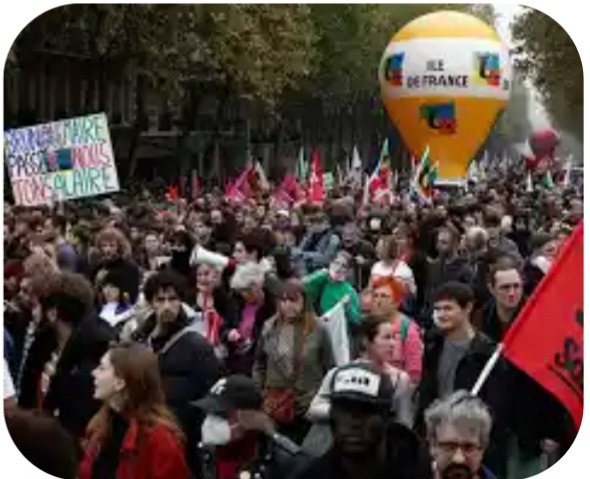
Widespread cost-of-living protests erupted across multiple European nations on October 17, 2026, driven by soaring fuel and food prices, housing shortages, low wages, and education sector grievances.
France.
Turnout. Interior Minister Laurent Nunez reported 550,000 participants nationwide, including 110,000 in Paris, while the CGT union estimated turnout closer to 800,000.
Incidents. Demonstrations turned violent in several cities. Protesters set fire to a historic 140-year-old town hall in Limoges, vandalized city halls in Marseille and Lille, torched a tourist office in Lyon, and looted shops in Paris.
Arrests & Response. Police arrested over 400 to 1,000 people nationwide. President Emmanuel Macron condemned the violence, vowing that those responsible would be prosecuted.
Portugal
Turnout: Tens of thousands of people marched in Lisbon, alongside demonstrations in Porto and Coimbra.
Grievances: Organized by trade unions (CGTP) and housing rights groups, protesters focused on surging housing costs (house prices have doubled since 2017), high rents, low wages, and basic food and fuel inflation.
Government Stance. Portuguese Parliamentary Affairs Minister Carlos Abreu Amorim stated that the government would not yield to street demands.
Italy.
Locations. Protests occurred in Milan, Bologna, and other cities, combining peaceful marches with violent clashes.
Incidents: In Milan, police cleared the cathedral square with tear gas after a march turned disorderly. In Bologna, protesters threw stones at police, prompting officers to use water cannons and tear gas; seven people were arrested.
Response:. Prime Minister Giorgia Meloni condemned the violence while acknowledging the right to peaceful protest.
Belgium & Other Unrest.
Belgium. Student and worker groups protested in Brussels and Liège over university registration fees, rising education costs, and living standards. Police deployed tear gas and water cannons.
.
Albania. Separate ongoing mass student protests continued demanding the resignation of Prime Minister Edi Rama over corruption, job shortages, and education standards.